Cancer biology, metabolism, immunology, and translation

The Huang Lab studies disease mechanisms and builds therapies that move toward patients.

Gang Huang Lab is an interdisciplinary research group at UT Health San Antonio and Mays Cancer Center spanning hematology, solid tumors, metabolism, immunology, trauma research, and product development.
5+ Research arms
100+ Peer-reviewed papers
139 Public bibliography entries

Overview

Welcome to the Huang Lab

At The Huang Lab, we are dedicated to advancing the understanding and treatment of human disease through rigorous, multidisciplinary research. Under the leadership of Dr. Gang Huang, our team seeks to bridge fundamental discoveries with real-world applications, with a particular emphasis on hematology, metabolism, cancer biology, medical product development, CAR T-cell therapy, trauma research, and military health.

We focus on the complexities of both blood-related cancers and solid tumors while exploring how metabolic pathways and immune responses influence disease progression. By integrating expertise across these domains, we strive to develop innovative interventions that improve patient care and outcomes worldwide.

Mission

Our mission

Unraveling fundamental mechanisms

We decipher the genetic, epigenetic, and metabolic factors driving cancer and related conditions to identify vulnerabilities that can be targeted therapeutically.

Innovative therapeutic strategies

From engineered cell therapies for solid tumors to translational programs such as PH102, we push discovery toward more effective and less toxic interventions.

Collaborative science

We work across academic, clinical, and industry settings to accelerate translation, expand technical reach, and move promising programs forward faster.

Education and mentorship

Training students, postdoctoral fellows, and early-career researchers is a core part of the lab’s work and long-term impact.

Focus areas

Current focus areas

Hematology and metabolism

We study hematopoietic stem cells, blood disorders, and hematologic malignancies with special attention to mitochondrial metabolism and epigenetic control.

Solid tumors and immunotherapy

We develop next-generation therapeutic strategies for liver cancer and other solid tumors, including programs that reshape the tumor immune microenvironment.

Cancer-associated cachexia

We investigate the metabolic drivers of cachexia and build translational programs to improve patient strength, treatment tolerance, and quality of life.

Product development

The lab actively translates discoveries into diagnostics, therapeutic assets, and venture-backed programs that can reach patients.

Research

Programs in motion

See all projects
active
hematopoietic stem cellsMDSmetabolismepigenetics

Hematologic Malignancies and Blood Disorders

The lab studies MDS, MPN, acute leukemia, and blood disorders by connecting stem cell regulation with mitochondrial metabolism and epigenetic control.

This research arm investigates how genetic, epigenetic, and signaling programs regulate hematopoietic stem cell self-renewal and differentiation in normal and diseased states.

The lab has highlighted how mitochondrial metabolism, including components of the succinate dehydrogenase complex, contributes to disease pathology and therapeutic opportunity.

Projects in this area include genetically engineered mouse models, metabolism-focused mechanism studies, and translational programs aimed at new therapies for MDS and related diseases.

translational
CAR Tsolid tumorsliver cancerimmune microenvironment

Solid Tumor Therapies and Immunotherapy

The lab is building next-generation therapeutic strategies for solid tumors with emphasis on liver cancer, CAR T-cell engineering, and the tumor immune microenvironment.

Solid tumors such as hepatocellular carcinoma create hostile immune microenvironments and physical barriers that reduce the effectiveness of conventional therapies.

The lab is developing CAR T-cell-based approaches that not only recognize tumor cells but also reshape the tumor microenvironment and deliver therapeutic payloads directly into the tumor site.

This work underpins translational programs such as PH102 and related spin-out activity focused on moving promising assets toward clinical development.

active
cachexiametabolismbiomarkerstranslation

Cancer-Associated Cachexia

The lab investigates the metabolic and inflammatory drivers of cachexia to identify biomarkers, mechanisms, and intervention points that improve patient outcomes.

Cancer-associated cachexia causes severe weight and muscle loss and undermines treatment tolerance, quality of life, and survival.

The Huang Lab studies how tumors communicate with distant tissues to drive systemic metabolic disruption, muscle wasting, and adipose depletion.

This interdisciplinary program connects cancer biology, metabolism, immunology, and clinical translation with the goal of developing new diagnostics and therapies.

People

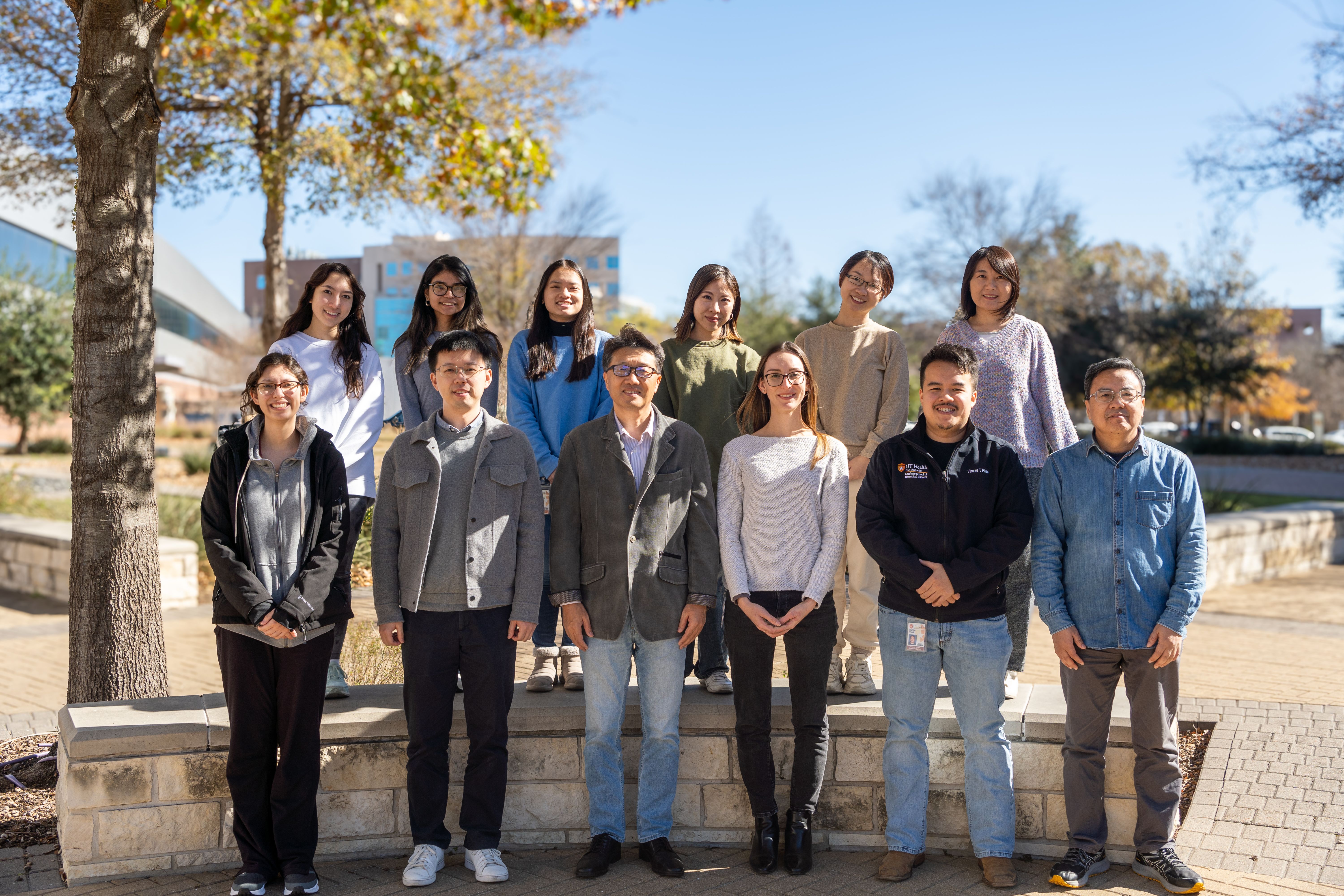
Meet the current lab

Full team directory
Headshot of Dr. Gang Huang

Principal Investigator

Gang Huang, PhD

Professor, Kathryn Mays Johnson Distinguished Chair in Oncology

Dr. Gang Huang leads the Huang Lab at UT Health San Antonio, where the group studies cancer biology, hematology, metabolism, immunology, and translational product development.

His work spans fundamental mechanisms and commercialization pathways, including therapeutic programs emerging through spin-out companies.

Postdoctoral Scholar

Jie Bai, PhD

Postdoctoral Scholar

Dr. Bai contributes to the lab’s work on hematopoietic stem cells, cancer biology, and translational mechanisms.

Staff

Tian Li

Lab Manager

Tian Li supports lab operations, experimental workflows, and the day-to-day execution of research programs across the Huang Lab.

Student Researcher

Kasie Liu

Undergraduate Research Assistant

Kasie Liu contributes to research support and student-driven projects within the lab’s broader translational science programs.

Spin-outs

Companies built from translational work

Company profiles

Powerhouse Therapeutics

A Huang Lab spin-out advancing PH102 and selected solid-tumor cell therapy programs toward the clinic.

Powerhouse Therapeutics was formed to translate Huang Lab discoveries into clinical-stage therapeutics, with an emphasis on oncology programs that emerged from the lab’s work in solid tumors and the tumor immune microenvironment.

Its initial portfolio includes PH102 and cell-therapy-related programs positioned for translational development, manufacturing readiness, and downstream partnering.

PH102solid-tumor cell therapytranslational development
Visit company

Abioremedi

A Huang Lab-affiliated company focused on translating innovative biological technologies into real-world impact.

Abioremedi represents the lab’s broader commitment to building translation pathways around promising science and product concepts.

The company section is structured so final brand assets, detailed program descriptions, and outbound links can be updated as materials are finalized.

biological technologytranslationcommercial development
Visit company

Join the lab

Join our team

The lab welcomes postdoctoral scholars, graduate students, undergraduates, post-baccalaureate researchers, and staff who want to work on cancer biology, metabolism, immunology, genetics, and translational therapeutics.

Prospective trainees should contact Dr. Huang and review the current openings and opportunities highlighted on this site.

News

Recent updates from the lab

View all news